







The future of work
“My life, and by extension everyone else's, is meaningless.” (Bender, Futurama)

Pain…
The word for ‘work’ in most continental European languages is thought to derive from the Latin word ‘tripalium’, a Roman-era torture device. As that suggests, for many centuries, the ask of most workers was primarily physical and frequently life shortening. As we developed machines that were stronger and, increasingly, as dextrous, humans have shifted towards more cognitive activities. However, there are now fears that the current frontier of machines is about to chase us off this patch too. Below we discuss some of the ways that this misunderstands our role in the economy and why it is too soon to panic/celebrate (depending on your perspective).
What makes us different?
We can go back as far as the invention of fire to help explain our enduring advantage over machines. Fire transformed our diet, making the inedible, edible. In particular, protein rich staples such as rice, wheat and potatoes were rendered more easily digestible, resulting in a dramatic shortening of our intestinal track. As the energy needed for digestion declined, the surplus was rerouted to support growth elsewhere in the body, with our brains ultimately hogging the lions share. The result was an expanded organ, which despite being only 2 – 3% of our body mass, today accounts for 25% of energy consumption (vs. 8% in Primates).
The development of a prefrontal cortex was part of this upgrade. This key cognitive enhancement increasingly distinguished us from the rest of our fellow inhabitants of the planet, allowing us us to imagine (and create) futures different to any seen previously. On the other hand, my wife’s miniature daschunds live pretty identically to their forebears a hundred years ago. They are possibly both lairier and lazier, but they have not (yet) invented tools or technology to progress in any way – they lack imagination, albeit not character and a taste for performative security.
Over the millennia since the invention of fire (among many other breakthroughs), humans were enabled to gather together in ever larger numbers. This led to individual intelligence giving way to forms of collective intelligence. Many minds began to make light work of the world’s most complex problems. Once, only a hundred or so people could be connected through hunter gatherer conversations. Today, billions can be connected in instantaneous conversation, a societal neural network that mirrors the human brain.
The growing knowledge mountain…
One of the resulting miracles of today is that what each individual knows is less important than what society as a whole knows and can do. Even if very few individuals in a society know quantum mechanics, the practical fruits of this knowledge are still available as if everyone does. There are, of course, many inputs to this under-acknowledged superpower. However, an important spark comes in 15th century Europe with the arrival of the moveable type printing press. This medieval equivalent of the internet (in how it spawned the information revolution that followed) certainly caused trouble. However, the resulting surge in literacy, and a burgeoning culture of literate dissent and disagreement also sowed the seeds for the all-important scientific revolution, the forebear of its industrial equivalent.
As we began to document the knowledge that had been accrued to date and develop the toolkit for more reliably growing it further by using conjecture, debate and disagreement, our collective knowledge mountain soared higher. Progress also became less fragile and vulnerable to the vagaries of word of mouth. Ultimately the knowledge mountain began paying out innovative breakthroughs like an overfilled fruit machine, as well as providing the means to use and improve them.
As an aside, China invented the moveable type printing press centuries before Europe. However, this innovative breakthrough was born into a very different cultural context and had much more muted effects on literacy, dissent and debate. The apparently necessary iconoclasm of European writers and thinkers, from Francis Bacon to Copernicus, is simply not seen in China to the same degree at the same time.
Individuals matter…
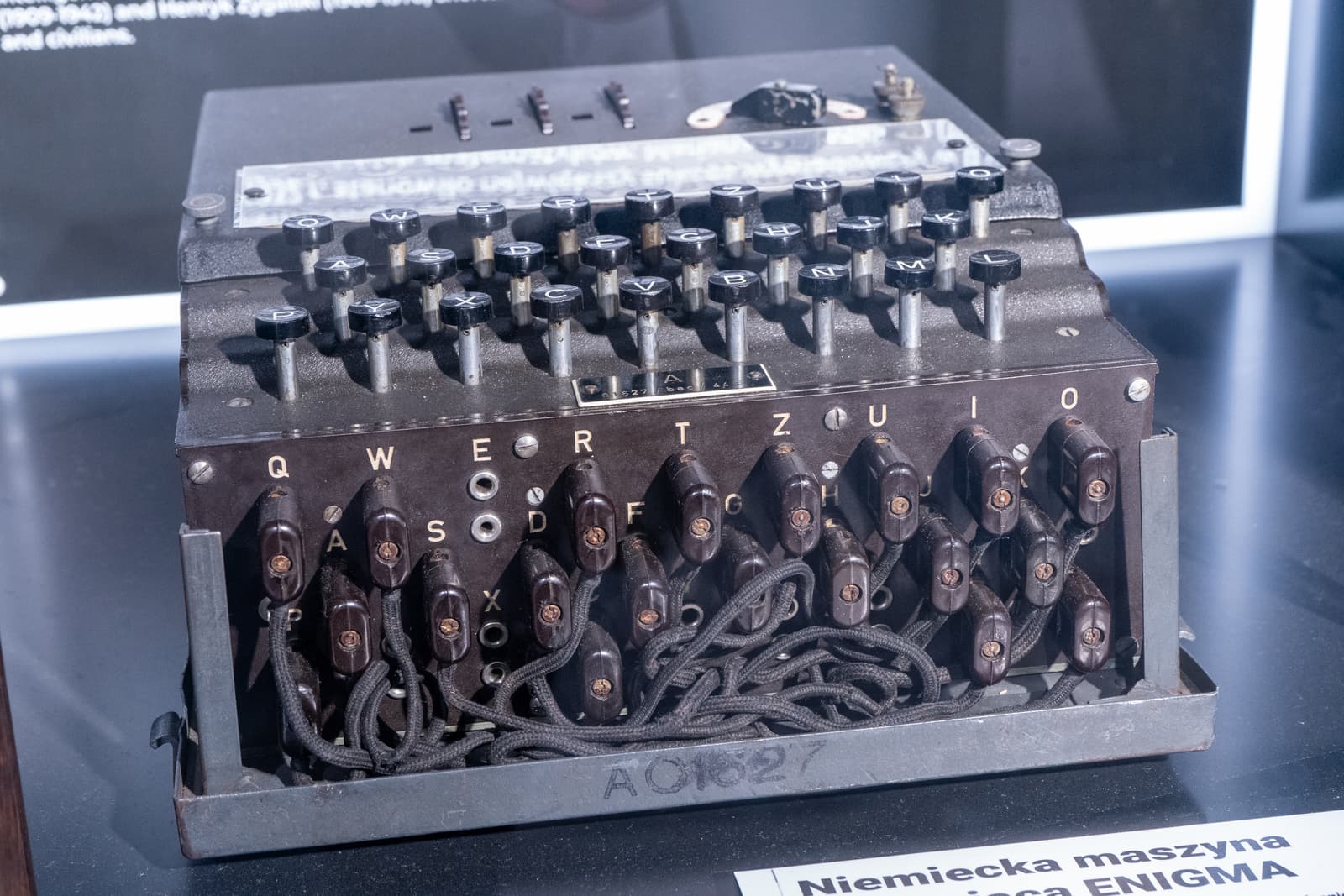
Bletchley’s Park’s contribution to the Allied war effort provides an interesting case study for workers, managers and companies on how individuals matter. In particular, the effort’s tacit acknowledgement of the role of diversity of human talent in problem solving. One of the organising principles of this vital war effort surrounded the gathering of diverse, often eccentric, brain types in order to crack codes. Whether bathtubs in the office to aid thought1 or simply a more pragmatic approach to gender and sexual orientation than seen in wider society at the time, the success of Bletchley has much to tell.
To that end, a well known economic historian, Jack Goldstone, suggested that – “Technological progress requires above all tolerance towards the unfamiliar and the eccentric.” The point being that you need to provide room for the eccentrics, the misfits and those that look, sound and think differently to flourish.
This gets us to the question of whether artificial intelligence can replace us in the workplace with one swipe. When our value was simply the muscle we could bring, machines had a (relatively) easy task. Many factories around the world now run without ever having to turn the lights on in the absence of humans. However, our value in the workplace today and in the future lies in our very individuality: the unique experience, knowledge and capabilities that we have accrued over our lives to this point. The more interesting, varied and rare we make our lives, the more valuable they will be in the workplace. That is because humankind’s last hillock of comparative advantage over technology, is likely to centre on understanding and empathising with our fellow human beings.
Conclusion
In a famous essay from 1932, the legendary British economist, John Maynard Keynes, speculated that in a hundred years, humankind could have solved the problem of subsistence. This would leave us facing our real ‘permanent problem’ – “…how to use his freedom from pressing economic cares, how to occupy the leisure, which science and compound interest will have won for him, to live wisely and agreeably and well.” He added - “There is no country and no people, I think, who can look forward to the age of leisure and of abundance without a dread.” With mankind deprived of its traditional purpose, we would see society convulsed with the equivalent of a general ‘nervous breakdown.’2
We are not there yet. However, perhaps Keynes will be proved right and work itself may become ultimately more discretionary for more of us. The problem for bosses will then become how you inspire people to work for your firm. In the absence of the stick of subsistence, perhaps, as with Mariana Mazzucato’s thoughts on the organisation of government programmes, a greater sense of mission becomes more important. This must go well beyond the word salad corporate missions of the moment of course - tangible and exciting objectives to get staff excited about turning up to jobs where they can actually make a difference may become essential. Whether that proves true or not, my bet continues to be that there will be plenty for us to usefully do in the decades and centuries ahead.
1 See the story of Dilly Knox – codebreaker.2 Lindsey, Brink; (2025) The Permanent Problem: The Uncertain Transition from Mass Plenty to Mass Flourishing (Oxford Academic)
2 Lindsey, Brink; (2025) The Permanent Problem: The Uncertain Transition from Mass Plenty to Mass Flourishing (Oxford Academic)
Important Information
The information in this document does not constitute advice or a recommendation and you should not make any investment decisions on the basis of it. Past performance is not a reliable indicator of future results.